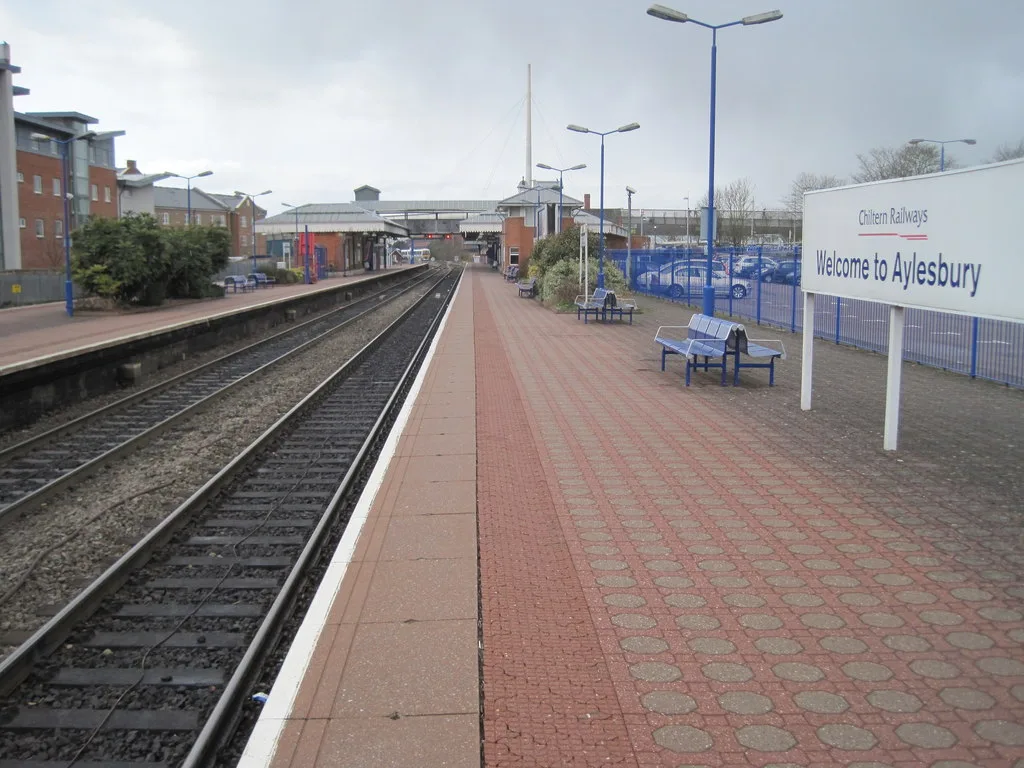

Buckinghamshire adopts its first transport plan since 2016 on 16 September. It names Aylesbury a congestion hotspot and the East West Rail link there unfunded.
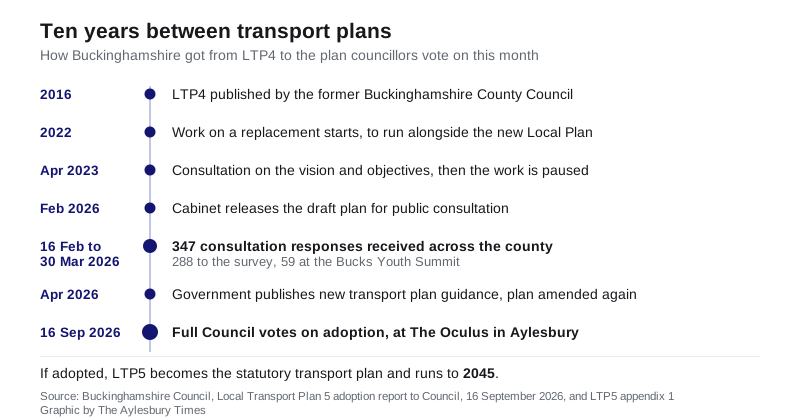
Buckinghamshire councillors will be asked on Wednesday 16 September to adopt the county’s first new transport plan in a decade. Local Transport Plan 5 replaces a document published in 2016 by the old county council, and it sets the policy framework for transport here until 2045. (Buckinghamshire Council, report to Council, 16 September 2026)
The meeting is at 4pm at The Oculus, Gatehouse Road, Aylesbury, and is webcast. (agenda for Council, 16 September 2026)
Two things about this plan matter more locally than the rest of it.
Aylesbury is named as a congestion problem, and the fix has no money
The plan’s own list of challenges puts Aylesbury at the top of the county’s traffic problems. It records “high traffic volumes in key urban areas and existing areas of congestion, particularly in Aylesbury and the south of the county”. (LTP5, appendix 1, page 12)
The council’s answer for Aylesbury is largely a railway it cannot build. The East West Rail Aylesbury Link is the first of four rail priorities in the plan. The council says the link would connect Aylesbury to Milton Keynes, Oxford, Bicester, Bedford, Northampton, Birmingham and Cambridge.
In the same document, in the list of challenges, it is recorded as a “longer term need” that “is currently unfunded”. Buckinghamshire Council is not the body that builds railways. Its stated role on this is to lobby government, and the plan says so directly.
The scale of that role shows in the plan’s own implementation table. It gives “delivery of EWR Aylesbury Link and improved connectivity between East West Rail and key employment sites and enterprise zones” a cost band of medium, which the table defines as between £500,000 and £2m. That is what the council expects to spend on the action, not what the railway would cost.
The document that names actual Aylesbury schemes is nine years old
LTP5 contains no schemes. It is a policy framework, and the detail is pushed down into supporting strategies. The plan states that those include town transport strategies, and that Buckinghamshire currently has three:
- Aylesbury, published in 2017
- Buckingham, published in 2017
- High Wycombe, published in 2024
The plan commits to reviewing all three and updating them “to reflect changes since publication”. No date is given for when the Aylesbury or Buckingham reviews start or finish. Work to implement LTP5 and write its supporting strategies is set to run from autumn 2026 to February 2028.
For anyone who commented on the consultation hoping for a specific junction, crossing or bus route, the report is blunt. “Locally specific issues / scheme requests” are listed among the feedback the council decided not to act on, because they are outside the scope of a countywide policy document. (LTP5 key changes summary, appendix 3)
347 people replied
The consultation ran from 16 February to 30 March 2026 and drew 347 responses across the whole county: 288 to the survey and 59 from the Bucks Youth Summit.
The council reports strong support for the approach. Every theme scored over 70% average agreement except motor vehicles, on 60%, and innovation, on 51%. One policy was voted down by respondents: I1b, on supporting drone development, drew 35% agreement against 48% disagreement. Its wording was changed to reflect safety concerns, rather than removed.
Written comments were less warm. The report summarises them as “predominantly critical but constructive”, with recurring themes of frustration at current conditions, doubt about whether the plan is deliverable, and criticism of road conditions, enforcement and service reliability.
Changes made after the consultation were modest. The main additions are:
- a new accessibility theme and an accessibility policy
- an integrated ticketing policy, committing to tap on, tap off across the county through Project Coral
- new sub-policies on rural public transport, community transport, access to green spaces and accessible innovation
Objections to car clubs and to the focus on electric vehicles were noted and rejected. The council’s response records that car clubs are only proposed in the context of new developments.
What it means for you
Nothing on the road changes on 17 September. LTP5 does not fund or start a single scheme, and the council’s own finance officer confirms it “does not in itself commit the Council to specific expenditure”.
What it does is set the terms of every future argument about transport in Aylesbury. Three practical consequences:
- Funding bids. The council warns that without an adopted plan it would be “in a weaker position to secure future external grants, influence partnership funding opportunities, secure developer contributions and inform consolidated funding allocations”. Money for local schemes flows through this document.
- Planning applications. LTP5 is written to align with the emerging Local Plan for Buckinghamshire, which has to accommodate a government housing target of around 91,000 new homes across the county by 2045. Transport conditions on new estates will be argued against LTP5 policies. Our Aylesbury planning news page tracks the applications.
- The rail link. If you want the East West Rail Aylesbury Link, the plan is honest that the council can only lobby for it. It is unfunded, and the decision sits with government. Current services from the town are on our Aylesbury train times to London page.
If you want to read the plan before the vote, appendix 1 is the plan itself and appendix 3 is a seven page summary of what changed after the consultation. Both are on the council’s agenda page for 16 September. Live closures and works are on our Aylesbury roadworks and travel page.
Have your say