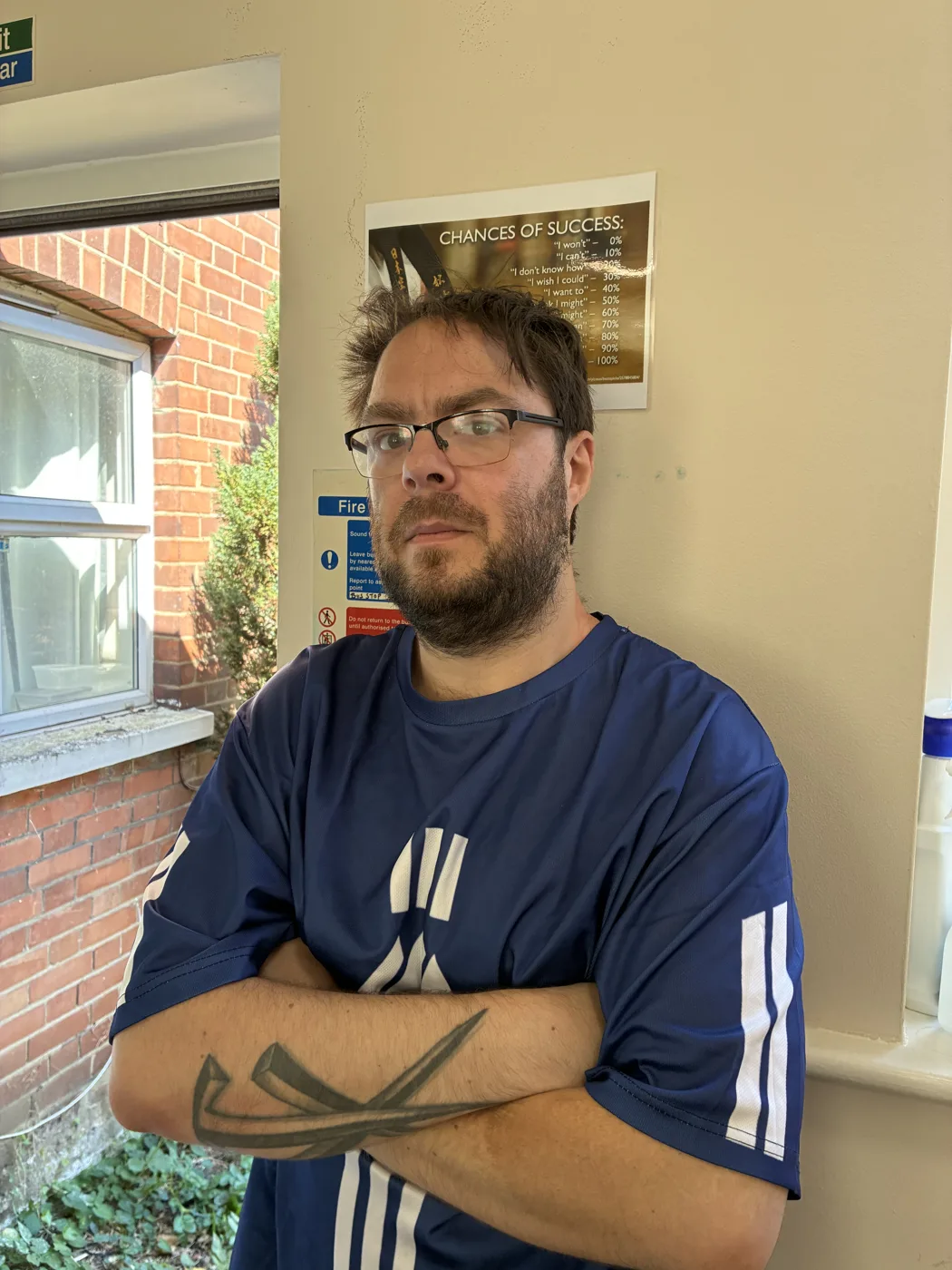

Jason arrived at Tring Road in Aylesbury having lost his home and his confidence. With support he now writes and releases songs, and has a home in sight.
A man who arrived at an Aylesbury supported housing service with, in his own words, his life “completely broken” now writes, produces and releases his own songs, and says a home of his own is in sight.
Jason was referred to Tring Road, a homelessness service in the town run by Sanctuary Supported Living. Sanctuary, the housing association behind it, sent us his story.
“When I first came to Tring Road, I was completely broken,” Jason said. “I had lost my home, my confidence and my sense of direction.”
What brought him there
Before Tring Road, Jason had been through a period of housing instability, the death of his grandfather and the breakdown of a significant relationship. Sanctuary says that upheaval had hit his confidence, his wellbeing and his sense of where his life was going.
When he arrived he needed help with money, with understanding what a tenancy asks of you, and with getting ready to live on his own in the longer term.
The practical part
Working with the staff, Jason set himself goals. According to Sanctuary, he had help with:
- budgeting
- paying his rent
- getting the benefits he was entitled to
- registering for housing through Bucks Home Choice
- building daily routines he could keep up once he had his own place
Then the music
As he settled and grew more confident, Jason started thinking about what mattered to him and what he wanted his life to look like after Tring Road. His Project Worker, Sagar, encouraged him to put what he had been through into songs.
Songwriting started as a personal outlet. It became, Sanctuary says, a central part of his recovery: writing, producing and releasing his own music gave him a sense of purpose and achievement, and a way of encouraging other people to talk about their own experiences.
“Music has played a huge part in my recovery,” Jason said. “Releasing my own songs on Spotify and YouTube gave me a sense of pride I’ve never felt before. I want people to know that it’s okay not to be okay and that talking about how you’re feeling can make a difference.”
On the difference the service made, he said: “The difference between who I was when I arrived and who I am now is a complete 180. Supported housing has helped me put my life back together, and I wouldn’t be where I am today without the people who believed in me, especially Sagar, who has supported me in every way possible.”
Jason knows his recovery is still going on, Sanctuary says, but he is optimistic about what comes next and confident he can live independently.
What Tring Road is
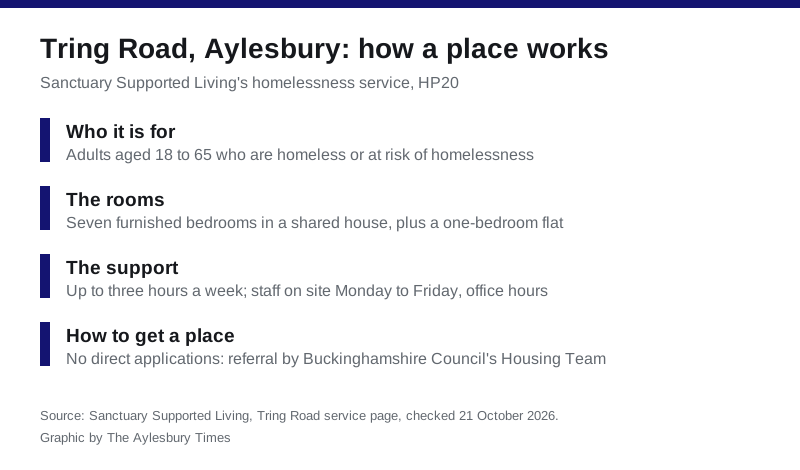
The service’s own page describes Tring Road as short-term, intensive housing management support for adults aged 18 to 65 who are homeless or at risk of homelessness. There are seven furnished bedrooms in a shared house and a self-contained one-bedroom flat, all let on licence agreements, with a lounge, kitchen, computer room and garden.
Staff are on site Monday to Friday during office hours, with an out-of-hours phone line. Each resident draws up a personal support plan with staff, and support carries on for a while after they move on to a place of their own.
What it means for you
If you, or someone you know, is homeless or about to lose a home in the Aylesbury area, Tring Road does not take applications directly. Its page says referrals must come from Buckinghamshire Council’s Housing Team, so that is the first call. To be eligible, a person must be 18 or over, homeless or at risk of homelessness, and need no more than three hours of support a week. The service does not accept people who currently have a drug or alcohol dependency.
Have your say