
Small housing schemes in Aylesbury Vale would pay up to £250 a square metre under a new levy going to Cabinet today. House extensions would pay nothing.
New building in Aylesbury Vale is set to pay a levy towards roads, schools and other infrastructure for the first time. Buckinghamshire Council’s Cabinet is asked today to send its proposed Community Infrastructure Levy (CIL) for the north and central areas to an independent examiner.
The old Aylesbury Vale district is the only part of Buckinghamshire without a CIL. At the moment developers there pay only through section 106 agreements, which are negotiated scheme by scheme. The council expects the new levy to bring in about £2.165 million a year from 2029/30.
The report to Cabinet for its 11am meeting suggests adoption “possibly in early/mid 2027”.
What builders would pay
CIL is a fixed charge for each square metre of new floorspace. The rates vary by the size of the scheme, the type of land and where it is. They are based on a viability study by consultants Dixon Searle Partnership. The report says they are typically lower than in the rest of Buckinghamshire, reflecting lower development values in the north and central areas.
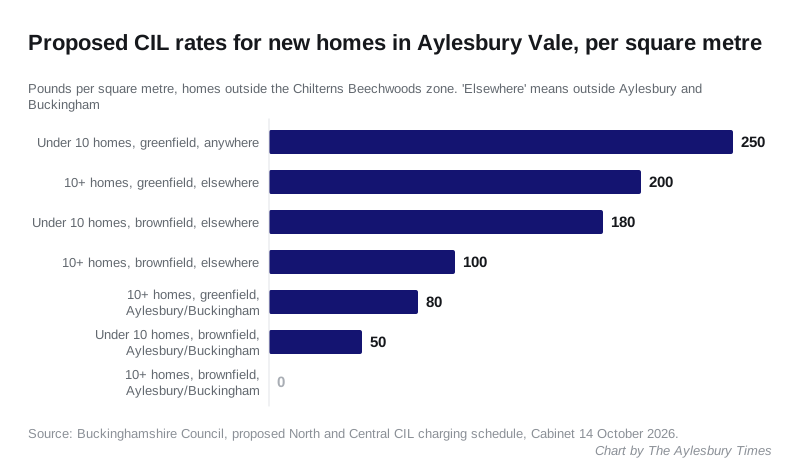
The proposed charging schedule sets these rates for new homes outside the Chilterns Beechwoods zone:
| Land | Where | Fewer than 10 homes | 10 or more homes |
|---|---|---|---|
| Greenfield | Aylesbury and Buckingham | £250 | £80 |
| Greenfield | Other areas | £250 | £200 |
| Previously developed | Aylesbury and Buckingham | £50 | £0 |
| Previously developed | Other areas | £180 | £100 |
Homes in the Chilterns Beechwoods zone of influence, where developers already pay towards protecting the woodland, get lower rates:
- Aylesbury (Zone C): £0 on both greenfield and previously developed land for schemes of 10 or more, and £0 on previously developed land for smaller ones
- Other areas (Zone D): £20 to £120 a square metre for schemes of 10 or more, and £100 on previously developed land for smaller ones
- Greenfield schemes of fewer than 10 homes: £170 everywhere in the zone
Other uses:
- large supermarkets, superstores and retail warehouses: £100 a square metre
- all other development: £25 a square metre
- flats, farm buildings, and public or not-for-profit buildings such as schools, surgeries and sports centres: nothing
To give a sense of scale: on our arithmetic, a single new 100 square metre house on a greenfield plot outside the Beechwoods zone would pay £25,000.
Big estates are exempt
Sites of 650 homes or more, or 16 hectares or more, that are allocated in an adopted Local Plan pay no CIL. They will still pay through section 106 deals, as now.
That threshold was 400 homes or 10 hectares in the draft that went out to consultation. The council raised it after comments. It says 650 better reflects the point at which a scheme needs its own primary school.
The report accepts this matters. Once the new Local Plan is adopted, it says, most new homes in the area by number will be on sites of more than 650 and will not pay CIL. The levy will mostly fall on smaller schemes and on unallocated sites.
What changed after the consultation
The draft was out for comment from 14 April to 24 May 2026 and drew 53 responses, including one from a local MP. Some said the rates were too low, others that they would stop homes being built, and others that the evidence was out of date.
The council has made five changes:
- farm buildings such as barns and stores pay nothing, rather than £25
- house extensions, alterations and garages pay nothing
- flats with shops underneath keep the nil rate for the flats; the shop pays
- the big-site exemption rises from 400 to 650 homes
- larger developments get longer to pay, with two new instalment bands for bills of £450,000 to £900,000 and over £900,000
The extensions change is aimed at householders. The report says people can end up with “disproportionate financial liabilities” under the current system when a claim for relief fails on a technicality. A nil rate means there is no relief to claim.
What it means for you
If you are extending your home, you would not pay CIL under this schedule.
If you plan to build a house or a small group of homes, especially on a greenfield plot in a village, budget for the levy once it is adopted. The report says that once CIL is in place, planning permissions for unallocated sites will be liable for it.
If you live in a parish, your parish or town council gets a share. The council must pass on 15% of CIL raised in each area, rising to 25% where there is a neighbourhood plan. The money has to go on infrastructure. The report gives environmental improvements, flood defences and CCTV as examples of what CIL has paid for elsewhere in the county.
The report also notes the funding gap the levy is meant to help with. The Vale of Aylesbury Local Plan put infrastructure costs at £1.069 billion, with a gap of £787 million between cost and the money expected.
What happens next
If Cabinet agrees, the council appoints an examiner. It must publish a statement of the changes at least four weeks before the hearing. Anyone who asked to be heard can speak at it. If the examiner backs the schedule, full Council would be asked to adopt it.
Planning applications around the town are on our Aylesbury planning news page.
Have your say