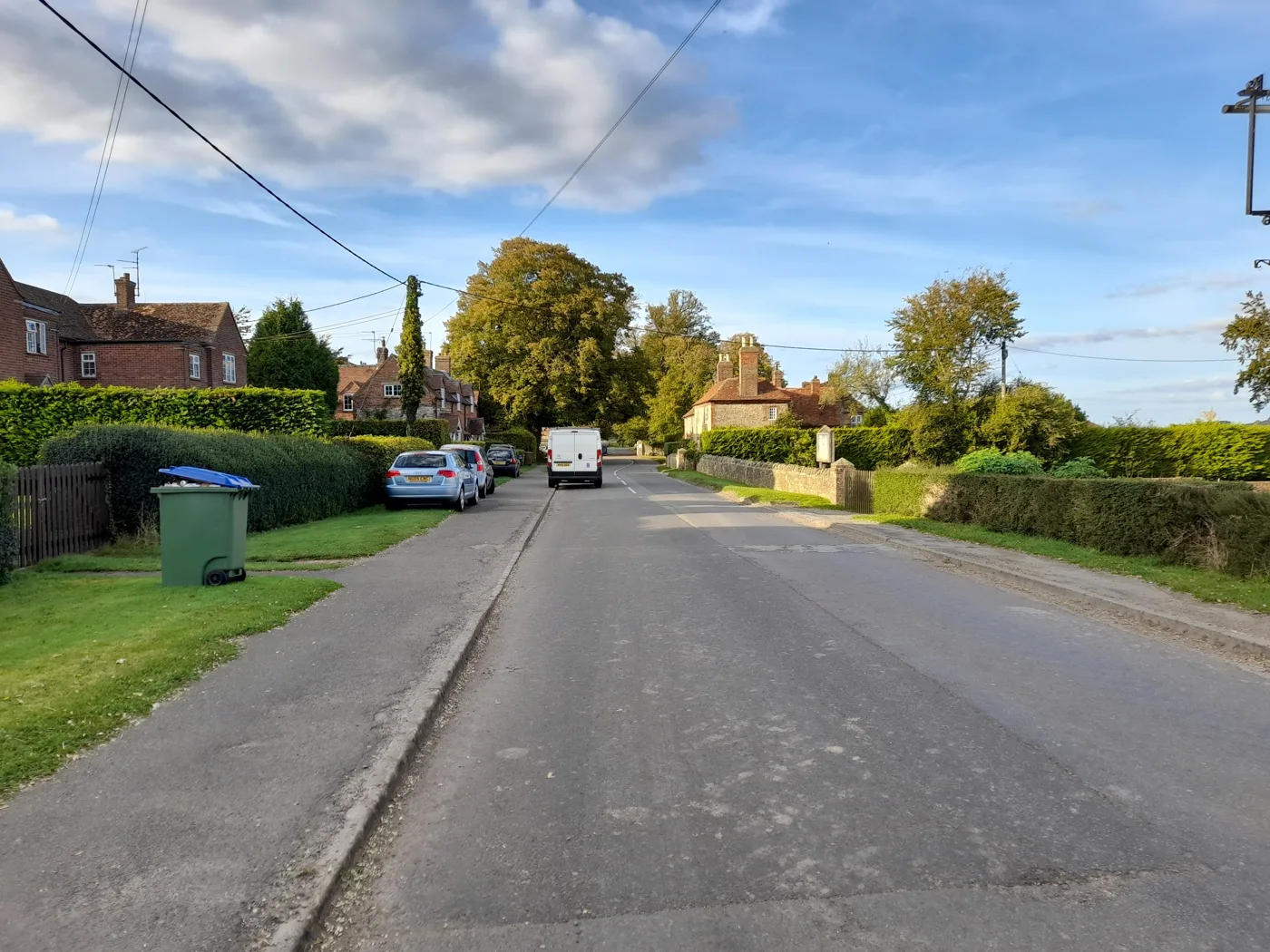

Officers recommend approval of the Hornage Farm plant near Chilton on Wednesday, against eight parish councils and a petition of more than 1,600 names.
Buckinghamshire Council’s Strategic Sites Committee decides on Wednesday morning whether to allow an anaerobic digestion plant on farmland near Chilton, four years after the application was made. Officers are recommending approval.
Eight parish councils have objected. So have campaign groups whose petitions carry more than 1,600 names.
The application, reference CM/0022/22, is from Acorn Bioenergy Ltd. It covers about 7.97 hectares of arable land south of the B4011 Bicester Road, between Oakley and Long Crendon. The officer report recommends that the committee defer and delegate the application to the Director of Planning and Environment to grant permission, subject to a Section 106 legal agreement covering habitat creation and biodiversity net gain, or to refuse it if that agreement cannot be completed.
The nearest settlements, Chilton and Easington, are about 1.5km from the site entrance. Aylesbury is roughly ten miles to the north-east.
What would be built
The facility would break down farm crops and animal waste in sealed tanks to make biomethane for the national gas grid. The officer report sets out the scale:
- five digester tanks, three silage clamps and two lagoons
- two combined heat and power plants, methane and carbon dioxide storage tanks
- storage and processing buildings, a site office and a weighbridge
- a new access onto the B4011 Bicester Road and a separate field access
- an underground pipeline connecting the plant directly to the national gas transmission network
It would run 24 hours a day, seven days a week, because anaerobic digestion is a continuous biological process. Up to five full-time equivalent staff would be on site from 7am to 7pm, with an electronic monitoring system running when nobody is there. Permission is sought for 25 years, after which the site would be decommissioned and returned to agriculture under a condition.
A draft Section 106 agreement would commit the operator to sourcing at least 35% of its feedstock from within 5km of the site and at least 80% from within 20km.
Who objected, and to what
Eight parish councils lodged objections: Ashendon, Chearsley, Chilton, Cuddington, Long Crendon, Oakley, Shabbington and Worminghall.
Chilton Parish Council’s position changed during the application. It initially raised no objection subject to traffic controls stopping lorries using the village as a shortcut. It now strongly objects, and it has commissioned its own landscape and transport assessments on behalf of several parish councils, arguing the applicant’s work “underestimate the impacts of the scheme”.
Two campaign groups, Hornage Anaerobic Digester Objection and Green Crendon, are recorded in the report as submitting “petition / signatory material comprising in excess of 1,600 signatories opposed to the development”. Crendon Corinthians Football Club also objected, over lorry traffic near its recreational facilities.
The River Thame Conservation Trust neither supported nor objected outright. It accepted that anaerobic digestion can cut carbon and reduce slurry spreading, but raised concerns about the site sitting next to Hornage Brook and about purpose-grown energy crops displacing land from food production and nature recovery.
The application reached committee because it was called in by Councillors Harriss and Waite. Councillor Schaefer also objected.
The traffic numbers, and how they moved
Lorry movements are the single biggest theme in the objections, and they are the part of the scheme that changed most.
The application as submitted proposed a maximum of 194 two-way HGV movements a day. After concerns raised in consultation, the applicant cut that. The condition now proposed would restrict the site to:
- 140 two-way movements a day (70 arrivals, 70 departures) for up to 24 days a year during peak harvest
- 80 two-way movements a day for the rest of the year
- no more than three biomethane tanker movements in any 24 hours
- feedstock and digestate lorries only between 7am and 6pm Monday to Friday, and 7am to 1pm at weekends and on bank holidays
The Environmental Statement predicts the biggest percentage increases on Chilton Road, Long Crendon (6.3%) and Dorton Road, Chilton (4.4%). On Bicester Road in Long Crendon, which the report identifies as the most sensitive location assessed, it predicts an increase of 0.4% during harvest and 0.3% the rest of the year.
The council’s own Highway Officer has maintained no objection throughout, a conclusion the parish councils dispute. The applicant has also offered to keep lorries out of Long Crendon at school start and finish times, though the report notes that routing on the public highway is hard to enforce through a planning condition and is better handled in an Operational Traffic Management Plan.
Landscape and the listed farmhouse
The nearest homes are at Hornage Farm, about 220m north of the site, and include the Grade II listed Hornage Farmhouse. The site also sits next to the Brill-Winchendon Hills Area of Attractive Landscape.
The council’s Heritage Officer found the plant would cause “less than substantial harm” to the farmhouse’s setting. Under the National Planning Policy Framework as rewritten in 2026, which replaced that phrase with a graded test, the report concludes the harm is “a limited degree of harm”, gives it considerable importance and weight under Policy HE6, and finds it outweighed by the public benefits.
The Landscape Officer concluded the plant would cause “moderate or minor adverse effects” that would not be significant, and that planting, earthworks and careful choice of material colours could integrate it into the landscape over time. The parish councils’ own commissioned assessments disagree.
The officer conclusion is that the heritage and landscape impacts “do not substantially outweigh the substantial renewable energy, climate change, energy security, rural economy benefits and moderate biodiversity benefits of the development”.
Four years in the system
The dates are their own story. The application was validated on 20 September 2022. Its statutory determination date was 10 January 2023. It has run on extensions of time ever since, the latest expiring on 30 September 2026, which is four weeks away.
An update report published for Wednesday’s meeting records further representations arriving both for and against since the main report was written. Officers say none raises a new material planning consideration, and the recommendation is unchanged. The applicant also submitted a technical note arguing the rewritten 2026 framework strengthens the case for renewable energy schemes; officers say that does not alter their assessment either.
What it means for you
- The decision is made in Aylesbury, on Wednesday 2 September at 10am, at The Oculus, Buckinghamshire Council, Gatehouse Road, HP19 8FF. The meeting is webcast.
- Approval on Wednesday would not be the final step. The recommendation is to defer and delegate, so permission is only issued once the Section 106 agreement is signed. If it cannot be, the recommendation is refusal.
- If it goes ahead, the traffic is capped in writing. 140 two-way lorry movements a day for at most 24 days a year, 80 the rest of the time, and none before 7am. Those limits would be planning conditions, so breaches are reportable to the council.
- The permission would be temporary. Twenty-five years from first operation, then decommissioning and restoration to farmland under a scheme the council has to approve.
The committee’s other item on Wednesday is an outline application at Wycombe Air Park, which is not in this district.
More from us: Aylesbury planning news and roadworks and travel.
Have your say